

Did You Know? Healthy Habits Are Easier to Build Early
Establishing good nutrition habits during childhood can benefit long-term wellness.

Healthy habits don't have to start with big changes. In fact, some of the most meaningful habits can begin with simple choices made every day—especially during childhood.
The foods children regularly see, taste, and enjoy can help shape their eating patterns as they grow. According to the World Health Organization (WHO), dietary practices and food preferences established during childhood and adolescence can often continue into adulthood. This makes the early years an important time to introduce children to a variety of nutritious foods and positive mealtime routines.
Why Do Healthy Habits Matter Early?
Childhood is a period of rapid growth and development. Children need a variety of nutrients to support their growing bodies and everyday activities.
A balanced diet can provide important nutrients such as protein, healthy fats, carbohydrates, vitamins, minerals, and dietary fiber. Rather than focusing on one particular food or nutrient, healthy eating is about creating an overall pattern that includes a variety of nutritious foods.
The WHO describes a healthy diet around four important principles:
Adequacy – providing the nutrients and energy the body needs
Balance – having an appropriate mix of different nutrients and food groups
Moderation – limiting foods and nutrients that may be harmful when consumed excessively
Diversity – eating a wide variety of nutritious foods
These principles can help families build a positive approach to nutrition without making mealtimes unnecessarily complicated.
Healthy Habits Can Be Simple
Building healthy habits doesn't mean every meal needs to be perfect. Small, consistent choices can make a difference.
Here are a few simple habits families can encourage:
1. Offer a Variety of Foods
Children benefit from being introduced to different fruits, vegetables, whole grains, legumes, and protein-rich foods. Variety helps provide different nutrients and can also help children become familiar with different flavors and textures.
2. Make Water a Regular Choice
Water is an important part of a healthy daily routine. Offering water regularly can help children develop the habit of choosing it as their everyday drink.
3. Create Positive Mealtime Routines
Regular meals and snacks can help establish structure around eating. Whenever possible, making mealtimes relaxed and positive can also help children develop a healthier relationship with food.
4. Let Children See Healthy Choices
Children often learn by observing the people around them. When parents and caregivers regularly enjoy nutritious foods themselves, children get to see healthy eating as a normal part of everyday life.
5. Avoid Making Food About Perfection
Healthy eating is not about getting every meal exactly right. It's about the overall pattern of choices over time.
There will be days when children prefer certain foods, skip a vegetable, or enjoy a treat. What matters is helping them gradually develop balanced habits that they can carry with them as they grow.
Nutrition Is More Than Just One Food
It's also important to remember that no single food can provide everything a growing child needs.
A child's nutritional needs are best supported by an overall balanced eating pattern. Whole and minimally processed foods, fruits and vegetables, whole grains, appropriate protein sources, and other nutrient-rich foods can all have a place in a child's diet.
For infants and young children, nutritional needs can be particularly specific. Parents and caregivers should consider the child's age, development, dietary needs, and advice from a qualified healthcare professional when making nutrition decisions.
What About Nutritional Supplements?
Sometimes, families may also consider nutritional supplements as part of their child's overall nutrition routine. However, supplements should complement—not replace—a varied and balanced diet.
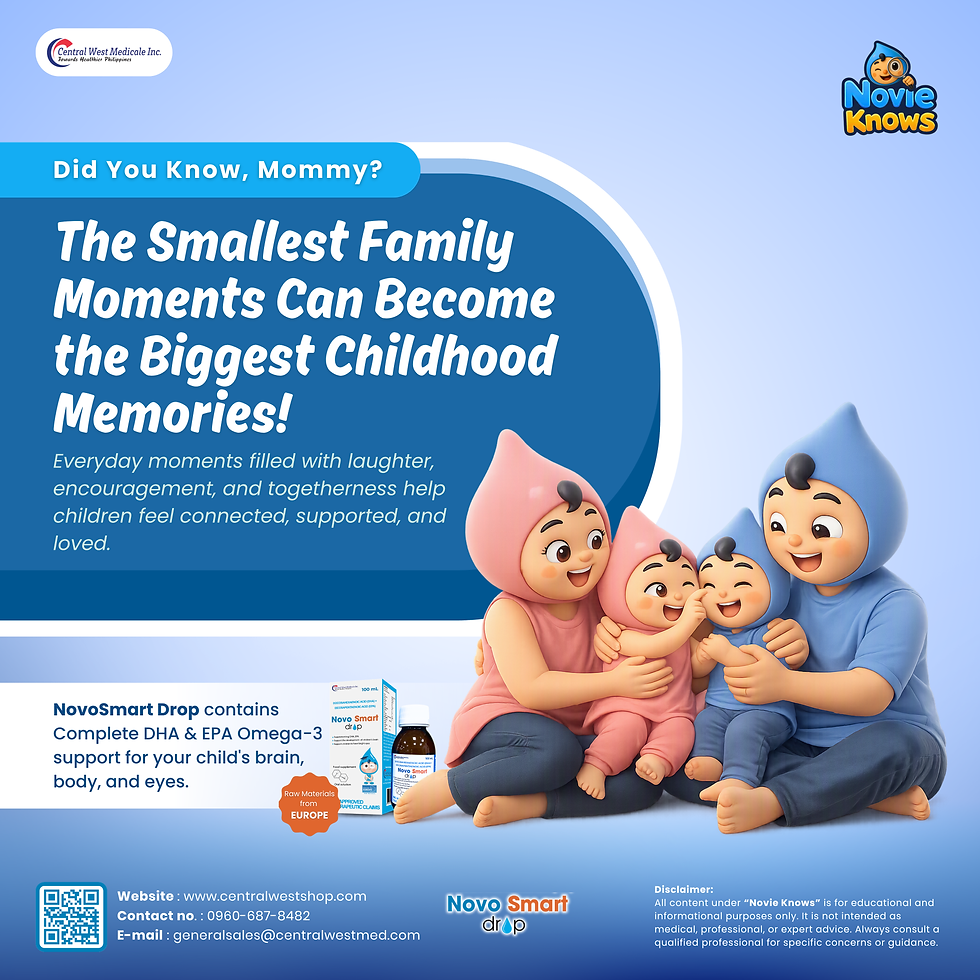
One example is NovoSmart Drop, an orange-flavored pediatric oral solution containing DHA and EPA, two omega-3 fatty acids. DHA is a structural component of the brain and retina, while omega-3 fatty acids are among the nutrients that can be included as part of a child's overall nutritional considerations.
The important point is that nutritional support should always be viewed as part of the bigger picture: balanced meals, healthy routines, adequate sleep, physical activity, and regular guidance from healthcare professionals when needed.
For parents who would like to learn more about NovoSmart Drop and its product information, you may visit the official Central West Shop website:
Explore the available product information and learn more about NovoSmart Drop as part of a broader approach to supporting children's nutrition.
Building Healthy Habits, One Day at a Time
Healthy habits don't have to happen overnight.
A nutritious breakfast, a serving of fruit, choosing water, trying a new vegetable, sitting together for a meal, or simply allowing children to see adults make healthy choices—these small moments can become meaningful habits over time.
The goal isn't perfection. It's giving children a positive foundation for making healthy choices as they grow.
Because healthy habits learned early can become habits that last a lifetime.
References
World Health Organization (WHO) – Healthy Diet
Provides information on healthy dietary practices, including the importance of starting healthy eating habits early in life and the principles of adequacy, balance, moderation, and diversity.
https://www.who.int/en/news-room/fact-sheets/detail/healthy-diet
World Health Organization (WHO) – Nutrition
Discusses the role of nutrition in children's health, development, learning, and overall well-being.
World Health Organization (WHO) – Healthy Diet: Keys to Eating Well
Covers the importance of dietary variety and choosing nutritious foods as part of a balanced diet.
World Health Organization – Healthy Diet and Lifelong Health
Highlights how dietary behaviors and preferences established during childhood and adolescence can extend into adulthood.
Central West Shop – Official Online Store
Product information for NovoSmart Drop and other products from Central West Medicale Inc.
𝘿𝙞𝙨𝙘𝙡𝙖𝙞𝙢𝙚𝙧:
𝘈𝘭𝘭 𝘤𝘰𝘯𝘵𝘦𝘯𝘵 𝘶𝘯𝘥𝘦𝘳 “𝘕𝘰𝘷𝘪𝘦 𝘒𝘯𝘰𝘸𝘴” 𝘪𝘴 𝘧𝘰𝘳 𝘦𝘥𝘶𝘤𝘢𝘵𝘪𝘰𝘯𝘢𝘭 𝘢𝘯𝘥 𝘪𝘯𝘧𝘰𝘳𝘮𝘢𝘵𝘪𝘰𝘯𝘢𝘭 𝘱𝘶𝘳𝘱𝘰𝘴𝘦𝘴 𝘰𝘯𝘭𝘺. 𝘐𝘵 𝘪𝘴 𝘯𝘰𝘵 𝘪𝘯𝘵𝘦𝘯𝘥𝘦𝘥 𝘢𝘴 𝘮𝘦𝘥𝘪𝘤𝘢𝘭, 𝘱𝘳𝘰𝘧𝘦𝘴𝘴𝘪𝘰𝘯𝘢𝘭, 𝘰𝘳 𝘦𝘹𝘱𝘦𝘳𝘵 𝘢𝘥𝘷𝘪𝘤𝘦. 𝘈𝘭𝘸𝘢𝘺𝘴 𝘤𝘰𝘯𝘴𝘶𝘭𝘵 𝘢 𝘲𝘶𝘢𝘭𝘪𝘧𝘪𝘦𝘥 𝘱𝘳𝘰𝘧𝘦𝘴𝘴𝘪𝘰𝘯𝘢𝘭 𝘧𝘰𝘳 𝘴𝘱𝘦𝘤𝘪𝘧𝘪𝘤 𝘤𝘰𝘯𝘤𝘦𝘳𝘯𝘴 𝘰𝘳 𝘨𝘶𝘪𝘥𝘢𝘯𝘤𝘦.


Comments