

The Smallest Family Moments Can Become the Biggest Childhood Memories!
Everyday moments filled with laughter, encouragement, and togetherness help children feel connected, supported, and loved.

Childhood is filled with little moments that may seem ordinary to adults but can become meaningful memories for children. From laughing together during dinner to sharing bedtime stories, these simple experiences help create a sense of belonging and strengthen family relationships.
The best part? You don't need an expensive vacation or an elaborate activity to make your child feel special. Sometimes, the smallest moments can mean the most.
1. Everyday Moments Help Build Strong Family Connections
Family bonding doesn't always require a special occasion. Everyday activities, such as preparing meals together, playing a favorite game, or talking about the day's adventures, can provide opportunities for parents and children to connect.
When parents show genuine interest in their children's thoughts, feelings, and discoveries, children have opportunities to feel heard and understood.
According to UNICEF, playful interactions between children and caregivers can support learning, strengthen relationships, and contribute to children's emotional well-being.
Try this: Set aside a few minutes each day to give your child your full attention. Ask about something that made them happy, listen to their stories, or join them in an activity they enjoy.
2. Laughter and Play Make Ordinary Days Special
Have you noticed how a simple game can turn an ordinary afternoon into a memorable experience?
Playing together gives children opportunities to explore their surroundings, express themselves, develop social skills, and enjoy meaningful interactions with the people they love.
Whether you're building with blocks, drawing silly pictures, dancing to a favorite song, or playing outdoors, the goal isn't to make every activity perfect. It's to enjoy the experience together.
Shared laughter can also give parents and children a welcome break from daily responsibilities and routines.
Try this: Let your child choose a family activity. Follow their ideas, encourage their creativity, and enjoy the moment without worrying about the outcome.
3. Words of Encouragement Help Children Feel Supported
Children experience new challenges as they grow. They may struggle to learn a new skill, feel disappointed when something doesn't go as planned, or need reassurance when facing unfamiliar situations.
During these moments, a parent's patience and encouragement can make a difference.
Recognizing a child's effort, listening without judgment, and offering reassurance can help them feel supported as they learn and grow.
Instead of focusing only on achievements, celebrate the little steps along the way.
For example, you might say:
"I'm proud of you for trying!"
"Thank you for helping me today."
"I love hearing about your ideas."
"It's okay to make mistakes. We can learn together."
These simple expressions of encouragement can help create a home environment where children feel comfortable sharing their experiences and asking for help.
4. Family Routines Can Become Cherished Traditions
Some of the most memorable childhood experiences come from familiar routines.
A goodnight hug, a weekend breakfast, a favorite bedtime story, or a special way of celebrating birthdays can become traditions that children look forward to.
Predictable routines can help children experience a sense of stability and belonging. They also create regular opportunities for families to spend time together, even when schedules are busy.
You don't need to introduce a new tradition every week. Start with something simple and meaningful that your family can enjoy regularly.
Try this: Create a small family ritual, such as sharing one happy moment from the day before bedtime or enjoying a screen-free meal together.
Over time, these repeated moments can become a meaningful part of your family's story.
5. Being Present Matters More Than Being Perfect
Modern family life can be busy. Between work, school, household responsibilities, and digital distractions, finding time to connect may sometimes feel challenging.
But meaningful family moments don't have to last for hours.
A few minutes of attentive conversation, a shared laugh, or a comforting hug can provide an opportunity to reconnect.
Whenever possible, put distractions aside and focus on the person in front of you. Let your child know that their stories, questions, and feelings matter.
Remember, meaningful parenting isn't about creating a perfect childhood. It's about building a loving environment where children can learn, explore, make mistakes, and feel supported as they grow.
Every family is different, and the most meaningful moments are often the ones that happen naturally.
6. Growing Up Well Includes Love, Play, and Everyday Care
A child's development is shaped by many experiences, including responsive relationships, opportunities to play, adequate rest, and a balanced diet.
While family bonding helps nurture emotional connections, everyday health habits also play an important role in supporting a child's overall well-being.
Offering a variety of nutritious foods, encouraging active play, maintaining consistent sleep routines, and making time for family connection are practical ways to support children as they grow.
No single activity or product can replace these everyday foundations. Rather, children's well-being is supported by the combination of nurturing relationships, healthy routines, and appropriate care.
A Gentle Reminder for Parents
As you go through your daily routine, remember that you don't have to plan something extraordinary to create a meaningful childhood.
Sometimes, it's the silly joke at the dinner table, the encouraging words after a difficult day, or the bedtime story you've read a hundred times that makes a child smile.
These little moments are opportunities to show your child that they are valued, supported, and loved.
And while you nurture their emotional well-being, remember to care for their physical health, too.
Where Does NovoSmart Drop Fit Into Your Child's Everyday Care?
Just as meaningful family moments are part of a nurturing childhood, good nutrition is another important consideration as children grow.
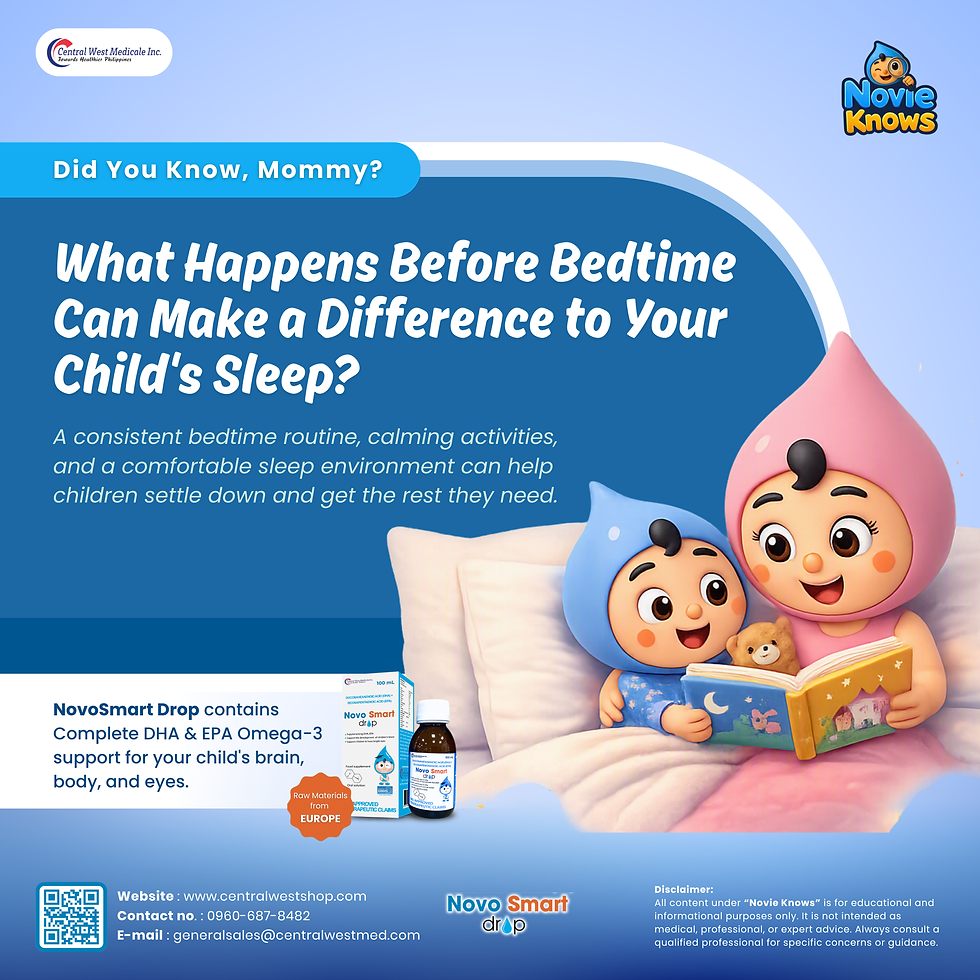
NovoSmart Drop is an orange-flavored oral solution containing DHA and EPA, two omega-3 fatty acids associated with brain and eye health. It also contains vitamin E.
DHA is an important structural component of the brain and retina, while EPA is another omega-3 fatty acid involved in normal body functions. These nutrients can be discussed as part of a broader conversation about children's nutritional needs.
However, nutrition is only one part of a child's development. A supplement does not replace a varied, balanced diet, quality sleep, active play, responsive caregiving, or regular pediatric care.
Parents and caregivers should consult a healthcare professional about whether an omega-3 supplement is appropriate for their child, particularly for infants and children with allergies or those taking medication.
At Central West Medicale Inc., we believe that helping families make informed decisions begins with accessible health information and responsible product education.
Because supporting a child's growth means caring for the whole child, one everyday moment at a time.
For more information about NovoSmart Drop and other health and wellness products, visit the official CentralWestShop website:
Let's Make Every Little Moment Count!
What's one simple family moment that always makes your child smile? Is it a bedtime story, a favorite family meal, a silly dance, or a special weekend activity?
Share your favorite family moment in the comments! Your idea might inspire another family to create a new memory of their own.
References
UNICEF Parenting — Playtime, Anytime!
Learn how everyday routines and playful interactions can create opportunities for learning and connection between parents and children.
UNICEF Parenting — How Play Strengthens Your Child's Mental Health
Explore how shared play can strengthen caregiver-child relationships and support children's emotional well-being.
Harvard University Center on the Developing Child — Serve and Return
Understand how responsive, back-and-forth interactions between children and caring adults contribute to early development.
Harvard Health Publishing — Why Play? Early Games Build Bonds and Brain
Learn why responsive play and positive interactions are important during infancy and toddlerhood.
UNICEF — The Art of Parenting: Training Guide
Explore how family routines and traditions can support children's sense of stability, security, and belonging.
Disclaimer
𝘈𝘭𝘭 𝘤𝘰𝘯𝘵𝘦𝘯𝘵 𝘶𝘯𝘥𝘦𝘳 “𝘕𝘰𝘷𝘪𝘦 𝘒𝘯𝘰𝘸𝘴” 𝘪𝘴 𝘧𝘰𝘳 𝘦𝘥𝘶𝘤𝘢𝘵𝘪𝘰𝘯𝘢𝘭 𝘢𝘯𝘥 𝘪𝘯𝘧𝘰𝘳𝘮𝘢𝘵𝘪𝘰𝘯𝘢𝘭 𝘱𝘶𝘳𝘱𝘰𝘴𝘦𝘴 𝘰𝘯𝘭𝘺. 𝘐𝘵 𝘪𝘴 𝘯𝘰𝘵 𝘪𝘯𝘵𝘦𝘯𝘥𝘦𝘥 𝘢𝘴 𝘮𝘦𝘥𝘪𝘤𝘢𝘭, 𝘱𝘳𝘰𝘧𝘦𝘴𝘴𝘪𝘰𝘯𝘢𝘭, 𝘰𝘳 𝘦𝘹𝘱𝘦𝘳𝘵 𝘢𝘥𝘷𝘪𝘤𝘦. 𝘈𝘭𝘸𝘢𝘺𝘴 𝘤𝘰𝘯𝘴𝘶𝘭𝘵 𝘢 𝘲𝘶𝘢𝘭𝘪𝘧𝘪𝘦𝘥 𝘱𝘳𝘰𝘧𝘦𝘴𝘴𝘪𝘰𝘯𝘢𝘭 𝘧𝘰𝘳 𝘴𝘱𝘦𝘤𝘪𝘧𝘪𝘤 𝘤𝘰𝘯𝘤𝘦𝘳𝘯𝘴 𝘰𝘳 𝘨𝘶𝘪𝘥𝘢𝘯𝘤𝘦.


Comments