

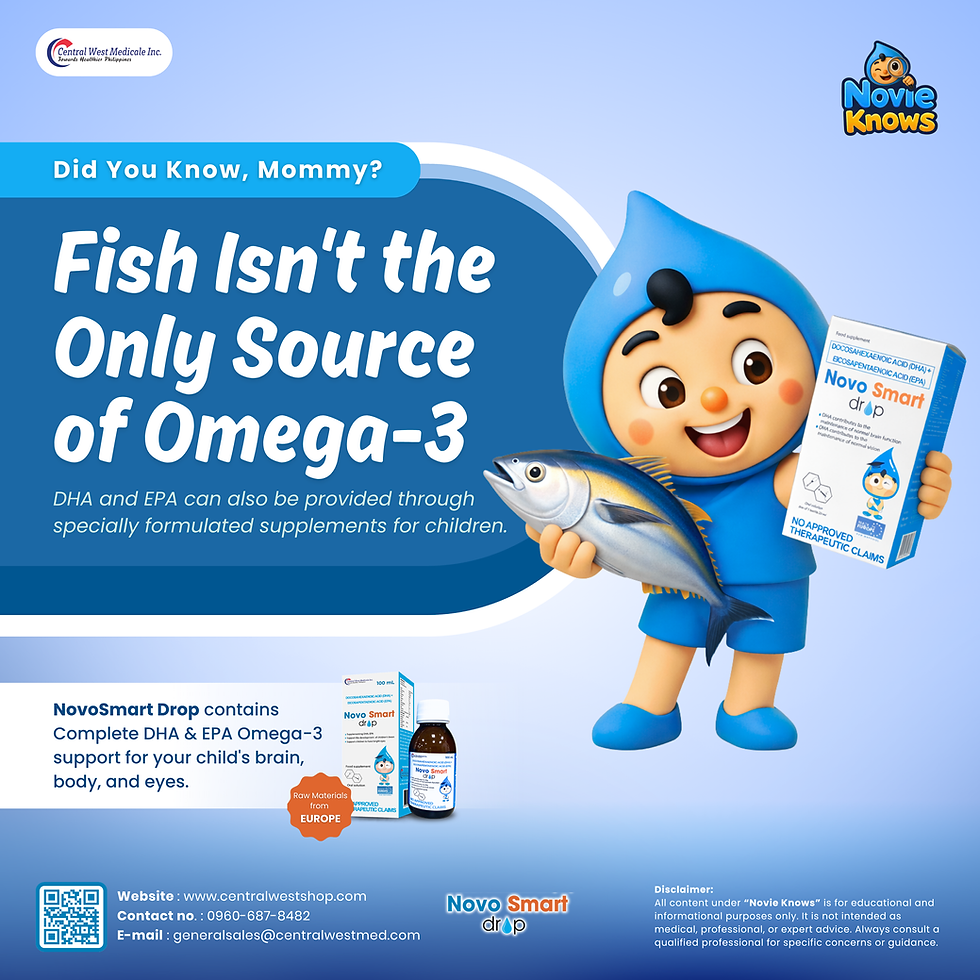
Fish Isn't the Only Source of Omega-3
- Jul 10
- 3 min read
DHA and EPA can also be provided through specially formulated supplements for children.
When people think of Omega-3 fatty acids, fish is usually the first food that comes to mind—and for good reason. Fatty fish such as salmon, sardines, tuna, and mackerel are among the richest natural sources of two important Omega-3 fatty acids: DHA (docosahexaenoic acid) and EPA (eicosapentaenoic acid).
However, fish isn't the only way children can receive these essential nutrients. For many families, specially formulated Omega-3 supplements can help bridge nutritional gaps when regular fish consumption isn't possible.
Why Are DHA and EPA Important?
DHA and EPA are long-chain Omega-3 fatty acids that play essential roles throughout childhood.
DHA is a major structural component of the brain and retina, making it particularly important during periods of rapid growth and development. Adequate DHA intake supports:
Healthy brain development
Cognitive function and learning
Normal visual development and eye health
EPA, while present in smaller amounts in the brain, contributes to overall health and works alongside DHA to support normal body functions.
Together, DHA and EPA help support a child's growing body, brain, and eyes as part of a balanced diet and healthy lifestyle.
What If Your Child Doesn't Like Fish?
Many parents know the challenge of encouraging children to eat fish regularly. Some children dislike the taste or smell, while others have limited access to seafood or follow dietary preferences that make regular fish intake difficult.
In these situations, healthcare professionals may recommend Omega-3 supplements that are specifically formulated for children. These products are designed to provide DHA and EPA in age-appropriate amounts, making it easier to support a child's nutritional needs when dietary intake falls short.
It's important to remember that supplements are intended to complement—not replace—a healthy, balanced diet rich in fruits, vegetables, whole grains, lean proteins, and other nutrient-dense foods.
Other Sources of Omega-3
Besides fish, Omega-3s can also come from:
Fish oil supplements
Algal oil (a plant-based source of DHA)
Fortified foods such as certain milk products and eggs
Flaxseed, chia seeds, and walnuts (which contain ALA, a different type of Omega-3 that the body converts to DHA and EPA only in small amounts)
While plant-based foods offer nutritional benefits, the body's conversion of ALA into DHA and EPA is relatively limited. This is why direct sources of DHA and EPA may be beneficial for some children.
Supporting Healthy Growth Every Day
Every child has unique nutritional needs. While a balanced diet remains the best foundation for good health, some children may benefit from additional nutritional support when they are unable to consume enough Omega-3-rich foods.
One example is Novosmart Drop, a children's Omega-3 supplement that contains DHA and EPA to help support healthy brain, body, and eye development. It can be considered as part of an overall healthy lifestyle and balanced nutrition, particularly for children who may not regularly eat fish.
As always, parents should consult a healthcare professional before starting any dietary supplement, especially for young children.
Learn More
Good nutrition plays an important role in helping children grow, learn, and thrive. Understanding where essential nutrients come from allows parents to make informed decisions that best fit their family's needs.
To learn more about children's nutrition and discover additional educational resources, visit www.centralwestshop.com.
References
Food and Agriculture Organization of the United Nations (FAO). Fats and Fatty Acids in Human Nutrition: Report of an Expert Consultation.
World Health Organization (WHO). Healthy Diet. https://www.who.int/news-room/fact-sheets/detail/healthy-diet
U.S. National Institutes of Health, Office of Dietary Supplements. Omega-3 Fatty Acids Fact Sheet for Health Professionals. https://ods.od.nih.gov/factsheets/Omega3FattyAcids-HealthProfessional/
U.S. National Institutes of Health, Office of Dietary Supplements. Omega-3 Fatty Acids Fact Sheet for Consumers. https://ods.od.nih.gov/factsheets/Omega3FattyAcids-Consumer/
European Food Safety Authority (EFSA). Scientific Opinion on Dietary Reference Values for Fats, including Saturated Fatty Acids, Polyunsaturated Fatty Acids, Monounsaturated Fatty Acids, Trans Fatty Acids, and Cholesterol.
American Academy of Pediatrics. Guidance on healthy nutrition and dietary patterns for children.
𝘿𝙞𝙨𝙘𝙡𝙖𝙞𝙢𝙚𝙧:
𝘈𝘭𝘭 𝘤𝘰𝘯𝘵𝘦𝘯𝘵 𝘶𝘯𝘥𝘦𝘳 “𝘕𝘰𝘷𝘪𝘦 𝘒𝘯𝘰𝘸𝘴” 𝘪𝘴 𝘧𝘰𝘳 𝘦𝘥𝘶𝘤𝘢𝘵𝘪𝘰𝘯𝘢𝘭 𝘢𝘯𝘥 𝘪𝘯𝘧𝘰𝘳𝘮𝘢𝘵𝘪𝘰𝘯𝘢𝘭 𝘱𝘶𝘳𝘱𝘰𝘴𝘦𝘴 𝘰𝘯𝘭𝘺. 𝘐𝘵 𝘪𝘴 𝘯𝘰𝘵 𝘪𝘯𝘵𝘦𝘯𝘥𝘦𝘥 𝘢𝘴 𝘮𝘦𝘥𝘪𝘤𝘢𝘭, 𝘱𝘳𝘰𝘧𝘦𝘴𝘴𝘪𝘰𝘯𝘢𝘭, 𝘰𝘳 𝘦𝘹𝘱𝘦𝘳𝘵 𝘢𝘥𝘷𝘪𝘤𝘦. 𝘈𝘭𝘸𝘢𝘺𝘴 𝘤𝘰𝘯𝘴𝘶𝘭𝘵 𝘢 𝘲𝘶𝘢𝘭𝘪𝘧𝘪𝘦𝘥 𝘱𝘳𝘰𝘧𝘦𝘴𝘴𝘪𝘰𝘯𝘢𝘭 𝘧𝘰𝘳 𝘴𝘱𝘦𝘤𝘪𝘧𝘪𝘤 𝘤𝘰𝘯𝘤𝘦𝘳𝘯𝘴 𝘰𝘳 𝘨𝘶𝘪𝘥𝘢𝘯𝘤𝘦.


Comments