

Learning Happens Beyond the Classroom
Every conversation, game, and story helps strengthen a child's growing mind.

When we think about learning, we often picture a classroom, books, worksheets, and lessons. But for children, learning doesn't stop when the school day ends.
Some of the most meaningful learning happens during ordinary moments at home — while talking with parents, playing a game, listening to a story, exploring the outdoors, or simply asking questions about the world around them.
Children are naturally curious. Every interaction gives them an opportunity to observe, think, communicate, solve problems, and make connections.
Learning Through Everyday Conversations
A simple conversation can become a learning opportunity.
When parents talk with children about what they see, hear, feel, or experience, children are exposed to new words and ideas. Asking questions such as "What do you think will happen next?" or "Why do you think that happened?" encourages children to express their thoughts and practice reasoning.
Responsive back-and-forth interactions between children and caregivers are also important for developing early language and social skills. Harvard University's Center on the Developing Child describes these responsive exchanges as "serve and return" interactions, which help build the foundation for later learning and development.
Try this at home: Instead of simply answering your child's questions, ask one back. Turn everyday conversations into little opportunities to think together.
Play Is More Than Just Fun
A child stacking blocks, solving a puzzle, pretending to cook, or playing a simple game may look like they're simply having fun — but they're also practicing important skills.
Through play, children can explore cause and effect, solve problems, use their imagination, communicate with others, and practice focusing their attention. Harvard's Center on the Developing Child notes that playful interactions can help children strengthen executive-function skills such as attention, working memory, and self-control.
UNICEF likewise emphasizes that play gives children opportunities to explore their environment, express ideas, develop problem-solving skills, and strengthen relationships with caregivers.
Try this at home: Give your child time for open-ended play. You don't always need an elaborate toy or activity. A few blocks, crayons, household objects, or a story can spark imagination.
Stories Help Children Explore Ideas
Storytime is another simple way to make learning part of everyday life.
As children listen to stories, they encounter new vocabulary, characters, situations, and ideas. Asking them what they think about a character or what they believe might happen next can turn reading into an interactive experience.
You can even create your own stories together. Let your child choose the characters, setting, or ending. This encourages imagination while giving them an opportunity to communicate their ideas.
Try this at home: After reading a story, ask:
"What was your favorite part?"
"What do you think the character should do?"
"What would you do if you were in the story?"
"Can we make up a different ending?"
There is no need for every conversation to become a formal lesson. Sometimes, simply being curious together is enough.
Everyday Experiences Can Become Learning Moments
Learning can happen almost anywhere.
Cooking together can introduce children to measurements and sequences. Gardening can encourage observation and patience. A walk outside can become an opportunity to identify colors, sounds, plants, or animals. Even cleaning up toys can help children practice sorting and organization.
The American Academy of Pediatrics highlights play as an important part of children's cognitive, language, social-emotional, and self-regulation development.
The goal isn't to turn every moment into a lesson.
It's to give children opportunities to explore, communicate, wonder, and discover.
Creating a Supportive Environment for Learning
Children's development is influenced by more than what happens inside a classroom. Their relationships, experiences, environment, play opportunities, and everyday interactions all contribute to their development.
Parents and caregivers can support this by creating a home environment where children feel comfortable asking questions, making mistakes, trying new things, and sharing their ideas.
A few simple habits can make a difference:
Talk. Have conversations about everyday experiences.
Read. Make stories part of your regular routine.
Play. Give children time to explore and use their imagination.
Ask questions. Encourage them to explain what they think and why.
Explore together. Let ordinary experiences become opportunities for discovery.
Listen. Give children your attention when they want to share something.
These moments don't have to be complicated. What matters is giving children opportunities to engage with the world around them.
Learning Also Depends on a Healthy Foundation
While conversations, play, reading, and meaningful interactions provide valuable learning experiences, children's overall development is supported by a combination of factors — including adequate nutrition, sleep, physical activity, nurturing relationships, and opportunities to learn and explore.
Omega-3 fatty acids are one group of nutrients that has received attention because DHA, in particular, is an important structural component of the brain and eyes. A balanced diet remains the foundation of good nutrition, and parents can discuss their child's individual nutritional needs with a qualified healthcare professional.
Where Does NovoSmart Drop Fit In?
This is where nutrition can be considered alongside all the other things that support a child's growing years.
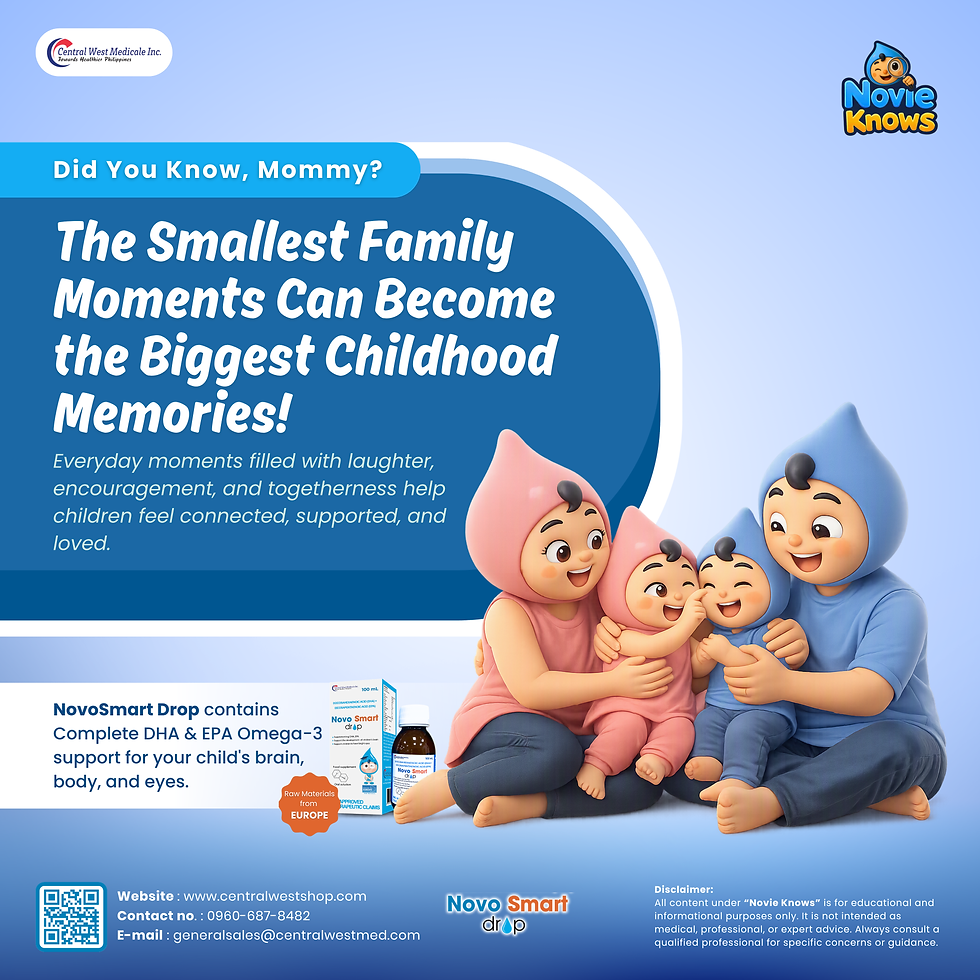
NovoSmart Drop is an orange-flavored omega-3 oral solution containing DHA and EPA, along with vitamin E. DHA is an omega-3 fatty acid found in high concentrations in the brain and retina.
NovoSmart Drop isn't a substitute for the conversations, play, stories, experiences, and relationships that make childhood meaningful. Instead, it can be viewed as one nutritional consideration among the many factors parents may think about when supporting their child's overall growth and development.
Every child is different, and nutritional needs can vary. Parents and caregivers should consider their child's overall diet and consult a healthcare professional when they have questions about supplementation, especially for younger children or children with specific health or dietary considerations.
The Biggest Learning Moments May Be the Simplest
A bedtime story.
A question during dinner.
A game on the floor.
A walk around the neighborhood.
A conversation before bedtime.
These everyday moments may seem small, but they give children opportunities to communicate, explore, imagine, and learn.
Because learning doesn't happen only at school.
It happens wherever curiosity meets connection.
For more information about NovoSmart Drop and its nutritional formulation, visit:
References
Harvard University Center on the Developing Child. Serve and Return: Back-and-Forth Exchanges.
https://developingchild.harvard.edu/key-concept/serve-and-return/
Harvard University Center on the Developing Child. Brain-Building Through Play.
https://developingchild.harvard.edu/resources/handouts-tools/brainbuildingthroughplay/
UNICEF. The Science of Play.
https://www.unicef.org/lac/en/parenting-lac/early-learning/science-play-child-development
UNICEF. What Is Free Play and Why Should You Encourage It at Home?
https://www.unicef.org/parenting/child-care/what-is-free-play
American Academy of Pediatrics / HealthyChildren.org. The Power of Play: How Fun and Games Help Children Thrive.
UNICEF Philippines. 5 Skills na Nadedevelop ng mga Bata Kapag Sila ay Naglalaro.
𝘿𝙞𝙨𝙘𝙡𝙖𝙞𝙢𝙚𝙧:
𝘈𝘭𝘭 𝘤𝘰𝘯𝘵𝘦𝘯𝘵 𝘶𝘯𝘥𝘦𝘳 “𝘕𝘰𝘷𝘪𝘦 𝘒𝘯𝘰𝘸𝘴” 𝘪𝘴 𝘧𝘰𝘳 𝘦𝘥𝘶𝘤𝘢𝘵𝘪𝘰𝘯𝘢𝘭 𝘢𝘯𝘥 𝘪𝘯𝘧𝘰𝘳𝘮𝘢𝘵𝘪𝘰𝘯𝘢𝘭 𝘱𝘶𝘳𝘱𝘰𝘴𝘦𝘴 𝘰𝘯𝘭𝘺. 𝘐𝘵 𝘪𝘴 𝘯𝘰𝘵 𝘪𝘯𝘵𝘦𝘯𝘥𝘦𝘥 𝘢𝘴 𝘮𝘦𝘥𝘪𝘤𝘢𝘭, 𝘱𝘳𝘰𝘧𝘦𝘴𝘴𝘪𝘰𝘯𝘢𝘭, 𝘰𝘳 𝘦𝘹𝘱𝘦𝘳𝘵 𝘢𝘥𝘷𝘪𝘤𝘦. 𝘈𝘭𝘸𝘢𝘺𝘴 𝘤𝘰𝘯𝘴𝘶𝘭𝘵 𝘢 𝘲𝘶𝘢𝘭𝘪𝘧𝘪𝘦𝘥 𝘱𝘳𝘰𝘧𝘦𝘴𝘴𝘪𝘰𝘯𝘢𝘭 𝘧𝘰𝘳 𝘴𝘱𝘦𝘤𝘪𝘧𝘪𝘤 𝘤𝘰𝘯𝘤𝘦𝘳𝘯𝘴 𝘰𝘳 𝘨𝘶𝘪𝘥𝘢𝘯𝘤𝘦.


Comments